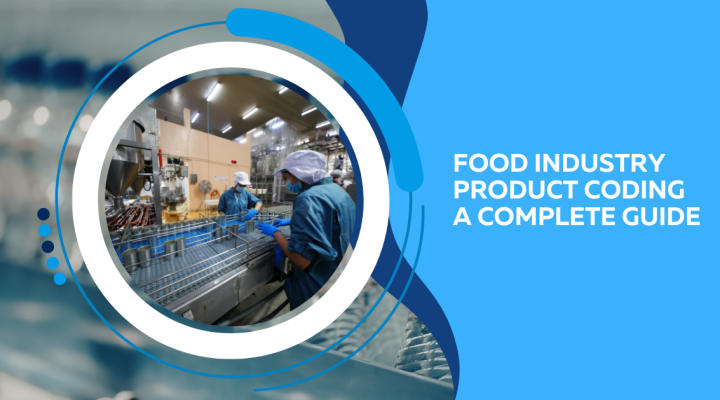
In the food sector, there is no room for guesswork.
From traceability and compliance to brand protection and production efficiency, food industry product coding plays a critical role in keeping operations running smoothly. A missed code, an illegible date or a non-compliant label is not just a minor production issue - it can result in rejected batches, retailer penalties or, in worst-case scenarios, product recalls.
Having worked with food manufacturers across the UK, we know that product coding is often treated as a small part of the line - until it goes wrong. This guide breaks down what food industry product coding really involves, the technologies available, the common pitfalls to avoid and how to get it right first time.
Food industry product coding refers to the application of essential information directly onto packaging or products during the manufacturing process. This typically includes:
These codes must be clear, durable and compliant with UK and international regulations. They must also withstand handling, storage, transport and varying environmental conditions such as moisture, refrigeration or freezing.
In short, coding is not just about printing ink onto packaging - it is about protecting your supply chain.
In the UK, food labelling and traceability are governed by regulations that require clear and accurate product identification. Retailers also impose their own coding standards, which are often stricter than legislation.
Incorrect or unreadable codes can lead to:
Reliable coding equipment is your first line of defence.
If an issue arises, traceability determines how quickly and accurately affected batches can be identified. Clear batch coding allows you to isolate problems without escalating to a full recall.
In today’s supply chain environment, speed matters. The ability to trace product history within minutes rather than hours can significantly reduce financial and reputational risk.
Coding systems that are unreliable or poorly integrated into production lines cause unplanned downtime. Ink issues, printhead blockages or inconsistent positioning can halt operations quickly.
Modern food industry product coding systems are designed to integrate seamlessly into high-speed environments while maintaining consistent print quality.
There is no one-size-fits-all solution. The right technology depends on your packaging material, production speed, environment and compliance requirements.
Here is a practical overview:
Ideal for high-speed lines and curved surfaces. CIJ printers offer flexibility across materials such as plastic, glass and metal. They are widely used for date and batch coding in food manufacturing.
Best suited for:
TIJ systems provide high-resolution print quality, particularly useful for barcodes and QR codes.
Best suited for:
TTO is commonly used on flexible films and pouches. It provides crisp, durable prints and works well for variable data.
Best suited for:
Laser systems permanently mark packaging without consumables such as ink or ribbon. They are ideal where permanence and minimal ongoing consumable costs are priorities.
Best suited for:
Each system has advantages and limitations. The key is not just choosing the right printer, but ensuring it is correctly specified, installed and supported.
Even experienced manufacturers encounter issues. The most common problems we see include:
Ink adhesion varies depending on packaging material. Always test coding performance under real production conditions, including chilled or frozen storage.
Choosing a lower-cost system that cannot handle production speed often results in downtime and inconsistent quality. Coding should never be the weakest link in your line.
Simple maintenance routines dramatically reduce breakdowns. Regular servicing, correct ink selection and operator training make a significant difference.
Coding systems must communicate with production control systems and quality assurance processes. Manual data entry increases the risk of human error.
Based on years of working alongside production teams, here are some straightforward but valuable recommendations:
Small improvements in these areas can deliver measurable cost savings over time.
The industry is moving toward greater automation and data integration. Smart factories require coding systems that connect with ERP and traceability software, reducing manual intervention and improving accuracy.
Sustainability is also shaping coding choices. Manufacturers are exploring laser systems and low-solvent inks to reduce environmental impact.
As packaging materials evolve, coding technology must evolve with them.
Food industry product coding may seem like a small component of the production line, but its impact is significant. Compliance, efficiency, traceability and brand protection all depend on getting it right.
The most successful food manufacturers treat coding as a critical control point rather than an afterthought.
When properly specified, installed and maintained, a coding system should operate quietly in the background — consistent, reliable and unnoticed. And in this industry, that is exactly how it should be.
If you would like tailored advice on improving your food industry product coding setup, speaking to a specialist who understands both the technology and the production environment can make all the difference.
Contact us today to discuss your requirements.

A complete solution for all industrial coding and marking equipment.
Industrial Printer Services Copyright 2026 | Created by GEL Studios